
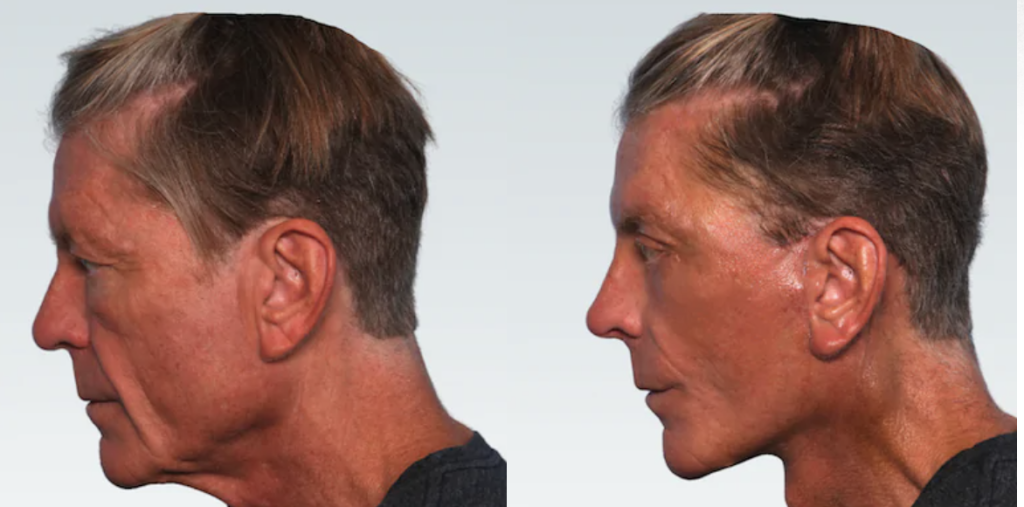
Facial aging affects everyone differently, and choosing the right facelift technique plays a major role in how natural your results look and how long they last. For patients considering facial rejuvenation in Miami, two approaches are most often compared: the deep plane facelift and the traditional facelift.
While both procedures are designed to reduce sagging, smooth contours, and restore a more youthful appearance, they work at very different anatomical levels. Understanding the difference between a deep plane facelift vs traditional facelift is essential when evaluating which option can deliver longer-lasting, more natural results.
At The Maercks Institute in Miami, facelift surgery is approached with a deep understanding of facial anatomy and tissue behavior. Advanced techniques such as the Composite Deep Plane MAERCKS Lift™ focus on repositioning deeper facial structures rather than simply tightening the skin — a distinction that can significantly impact both longevity and overall outcome.
Contents
What Is a Deep Plane Facelift?
A deep plane facelift is an advanced surgical technique that lifts the deeper layers of the face, including muscles, ligaments, and connective tissue beneath the superficial musculoaponeurotic system (SMAS). Instead of separating and tightening only the skin, the deeper tissues are repositioned together as a single composite unit.
This approach allows the surgeon to address facial aging at its structural source, particularly in the midface, jawline, and nasolabial folds. Because the skin is not placed under excessive tension, results tend to appear more natural and balanced.
Key characteristics of a deep plane facelift include:
- Lifting deeper facial structures rather than just tightening skin
- Restoring midface volume and contour
- Improving jawline definition and facial harmony
- Producing natural-looking results that age more gracefully over time
At The Maercks Institute, the Composite Deep Plane MAERCKS Lift™ refines this technique further by focusing on tissue preservation and anatomically driven incision placement.
What Is a Traditional Facelift?
A traditional facelift typically focuses on tightening the skin and, in some cases, the superficial SMAS layer. During the procedure, the skin is separated from underlying tissues, repositioned, and trimmed to reduce visible sagging in the lower face and neck.
While traditional facelifts have been successfully performed for decades, they generally work at a more superficial level. As a result, deeper facial descent — particularly in the midface — may not be fully corrected.
Traditional facelifts often:
- Primarily address surface-level aging
- Rely more heavily on skin tension to achieve lifting
- Provide limited improvement to midface volume loss
For patients with mild to moderate skin laxity, a traditional facelift can still provide noticeable rejuvenation, though results may not be as durable as deeper techniques.
Deep Plane Facelift vs Traditional Facelift: Longevity and Results
One of the most important factors when comparing a deep plane facelift vs traditional facelift is how long the results last.
Deep Plane Facelift Longevity
Because the deep plane technique repositions the underlying support structures of the face, results tend to be longer-lasting. Many patients experience rejuvenation that can last 10 to 15 years or more, depending on genetics, lifestyle, and skin quality.
Longer-lasting results are achieved by:
- Repositioning deeper tissues that provide natural facial support
- Reducing tension on the skin and incisions
- Correcting facial descent rather than masking it
Traditional Facelift Longevity
Traditional facelift results are still long-lasting but generally endure 5 to 10 years. Since the procedure focuses more on skin tightening, the natural aging process may become visible sooner compared to deeper techniques.
Key Differences Between Deep Plane and Traditional Facelifts
Deep Plane Facelift
- Targets deeper facial layers, including muscles and ligaments
- Provides excellent midface and jawline rejuvenation
- Produces a soft, natural appearance
- Results often last 10 years or longer
- Ideal for moderate to advanced facial aging
Traditional Facelift
- Focuses on tightening skin and superficial tissue
- Limited impact on deeper facial structures
- Results may appear tighter rather than volumized
- Longevity typically ranges from 5 to 10 years
- Best suited for mild to moderate skin laxity
Choosing the Right Facelift in Miami
Choosing between a deep plane facelift and a traditional facelift depends on several individualized factors, including:
- Degree of facial aging and tissue descent
- Desired longevity of results
- Skin quality and facial anatomy
- Personal aesthetic goals
A consultation with an experienced facial plastic surgeon is essential to determine which technique will deliver the most natural and lasting outcome for your specific needs.
Final Thoughts
When comparing a deep plane facelift vs traditional facelift, the deep plane approach often stands out for its ability to address facial aging at a deeper anatomical level. By restoring facial structure rather than simply tightening skin, it frequently delivers more natural-looking and longer-lasting results.
For patients seeking advanced facial rejuvenation in Miami, techniques such as the Composite Deep Plane MAERCKS Lift™ offer a refined, anatomically focused solution designed to age beautifully over time.
Frequently Asked Questions
What is the difference between a deep plane facelift and a traditional facelift?
A deep plane facelift repositions deeper facial structures, including muscles and ligaments, while a traditional facelift primarily tightens the skin and superficial tissue. The deep plane approach addresses aging at its structural source.
Which facelift lasts longer: deep plane or traditional?
Deep plane facelift results typically last longer, often 10 to 15 years or more. Traditional facelift results generally last between 5 and 10 years.
Does a deep plane facelift look more natural?
Yes. Because the deeper tissues are lifted instead of pulling the skin tight, deep plane facelifts usually produce more natural, balanced results.
Who is a good candidate for a deep plane facelift?
Patients with moderate to advanced facial aging, midface sagging, or loss of jawline definition are often good candidates. A consultation is required to determine suitability.
Is a deep plane facelift available in Miami?
Yes. Advanced deep plane facelift techniques, including the Composite Deep Plane MAERCKS Lift™, are available in Miami at The Maercks Institute.