Facelift Miami
Natural-Looking Facial Rejuvenation
A facelift is designed to address the structural changes that occur as the face ages, restoring definition to the cheeks, lower face, jawline and neck while preserving your natural appearance.
Dr Rian A. Maercks takes a structural approach to facelift surgery, focusing on the deeper tissues and supporting architecture of the face rather than relying primarily on tension through the skin.
The philosophy is simple:
Structure Over Stretch™
The aim is not simply to make the face tighter. It is to restore the structures that support the face and allow the overlying tissues to settle naturally around them.
Not tighter. Not pulled. Restored.
What Is a Facelift?
As we age, changes occur throughout the architecture of the face. The retaining ligaments, facial fat compartments, SMAS, muscles, fascia, skin and underlying skeletal relationships all contribute to the appearance of the face.
As these supporting tissues change and descend, facial volume can appear to move downwards.
The cheeks can become flatter, the lower face can become heavier, jowls can develop and definition along the jawline can become less distinct.
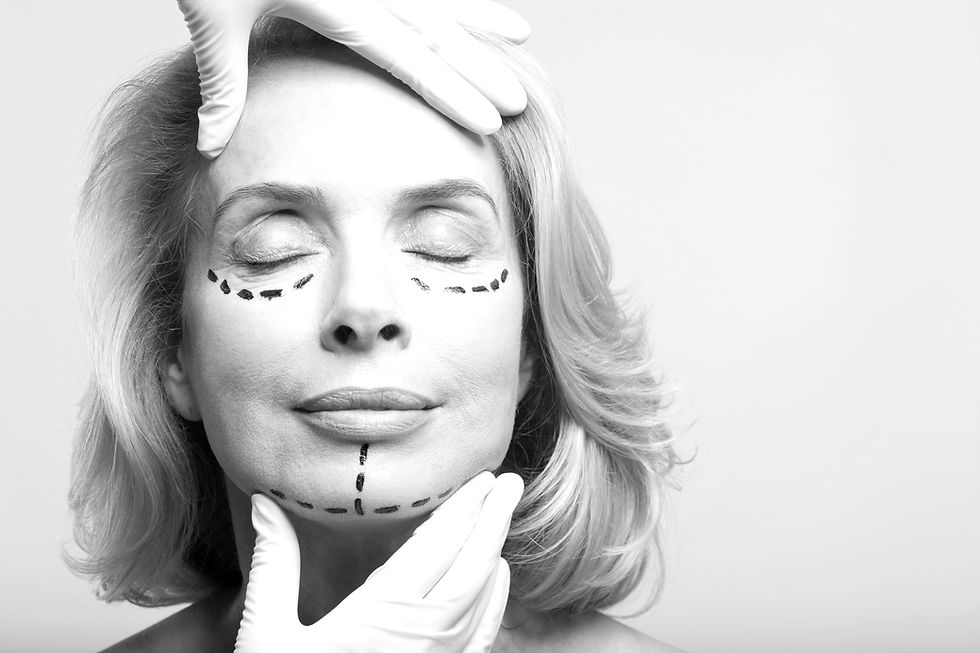
A facelift addresses these changes by repositioning and supporting facial tissues to restore a more youthful facial architecture.
Rather than simply pulling the skin tighter, Dr Rian's approach focuses on restoring the deeper structures first and allowing the overlying tissues to follow.
Restore the roots first. Let everything else follow.
The MAERCKS Lift™
The MAERCKS Lift™ is a composite deep-plane facelift developed by Dr Rian A. Maercks around the concept of deep structural and ligamentous support.
It is not simply presented as another version of a deep-plane facelift. The approach is centred around restoring the deeper architecture of the face rather than creating the appearance of a lift through surface tension.
Most people think a facelift lifts skin.
The MAERCKS Lift™ restores the structures that support the face.
The name reflects the principles behind the operation:
Musculo
Respecting and repositioning the muscular structures that contribute to facial form and expression.
Aponeurotic
Working with the SMAS and interconnected fascial architecture rather than treating ageing as loose skin alone.
Elevation
Returning descended facial tissues towards their youthful anatomical position.
Retention
Providing structural support to maintain the restored architecture.
Kedge
A ligament-based suspension concept at the centre of the operation.
Suspension
Using deep structural support rather than relying primarily on tension through the skin.

What Does a Facelift Treat?
Facelift surgery can address a number of visible signs of facial ageing, including:
-
Jowls
-
Sagging cheeks
-
Loss of facial definition
-
Lower-face heaviness
-
Less defined jawline
-
Facial skin laxity
-
Changes to the midface
-
Signs of ageing around the neck
The exact areas addressed will depend on your individual facial anatomy and the changes you are experiencing.
A comprehensive assessment is therefore essential when determining the most appropriate approach.
Why the Midface Matters
Everyone notices the jawline. Dr Rian looks at the cheek.
Many patients seek a facelift because they have noticed jowls or a loss of definition around the jawline.
However, changes in the midface can contribute to the appearance of ageing in the lower face.
The sequence can be:
Cheek descends → central face becomes heavier → jowl develops → jawline becomes less defined
This is why the cheek and midface can be an important part of comprehensive facial rejuvenation.
The jawline may be where you notice ageing. The cheek may be where you need to start.
Structure Over Stretch™
A face does not age because its skin simply becomes too large.
Ageing occurs across an interconnected architecture of:
-
Retaining ligaments
-
Facial fat compartments
-
SMAS
-
Muscles
-
Fascia
-
Skin
-
Skeletal relationships
As supporting tissues descend, youthful facial volume can appear to migrate downwards.
The cheek becomes flatter.
The lower face becomes heavier.
The nasolabial region can deepen.
Jowls emerge.
The jawline becomes less defined.
The MAERCKS approach is designed to restore the underlying architecture rather than relying primarily on surface tension.
Restore the roots first. Let everything else follow.
A Natural-Looking Facelift
The goal of modern facelift surgery is not to create a face that looks tight or pulled.
It is to create a refreshed and balanced appearance while preserving your natural facial characteristics.
The MAERCKS philosophy is based around:
Support centrally.
Release unnecessary lateral tension.
Let the skin remain soft.
The result should look like you — simply refreshed.
Subtle But Profound™
The objective is not to create a new face.
It is to restore the face that was there all along.
Frequently asked questions
How Will I Look After Surgery